ETS on a Mac

Is this possibility being worked on? Because as a KNX and Mac user, I think it could be a great advantage.
-

That's not the point... One could easily argue that 'well over 80% of the electrical trade has a Windows operating system', due to the lack of choice offered by software manufacturers. This forces people to use Windows ecosystem in the first place... If the proper tools are available, I guess the usage figures might be more in balance.
The Mac has no good reputation regarding 'field work', and yes, is highly valued in graphical sector, but just as much in the development sector. More and more projects require KNX to interconnect with other systems. Running servers (linux) and connecting to other dedicated services becomes way more mainstream in order to create true smart buildings.
From that perspective, I would assume a cross-platform software would be the way to go.
If ETS 6 was written from the ground up, it's a missed opportunity for it to support multi platforms.3 -

That's simply not the truth. For many years one of the most used operating systems, including the electricians, has been Android (Linux). Windows has been in the minority for a long time and its market share is shrinking every year. Many SmartHome experts and technician in particular use Apple/Mac.
5 -
@Roland Klöffel
0 -

@Roland Klöffel
OMG! You are now entering an operating system war as we knew it in the early 2000s. Please let's stop this. You did not provide any facts, but just you say based on your feeling that all are using Windows.
Your feeling and your assumption do not matter. What matters is if ETS is programmed in a modern way supporting multiple OS. Mac, Linux, Windows, Androit, or whatever OS.
If ETS & KNX do not want to become one of the next Blackberry, then I strongly recommend to open up, rather than arguing with arguments from the early 2000s. IoT provide more than an enough opportunities to replace KNX already. All this offers do not care Mac, Windows or whatever, they simply offer software for everyone. This, I think, matters!
2 -

Thanks Michael....I fully Agree... please stop the OS War in this topic. And KNX... please give users "choice"... let them use the OS they like. The software can't be that difficult to develop for multi platform infrastructure.
2 -

With the new Microsoft Surface Copilot+ PSs, among others, the ARM processor is now finding its way into the Windows world. And this discussion starts all over again.
Please update as soon as someone has tested Windows on ARM with KNX.0 -

I’ve been running KNX on Windows 11 Arm on a MacBook Pro M2 via Parallels for a year now. Have had no issues.
1 -

I think the Microsoft collapse over the last few days gives credence to alternative operating systems. Just like Betamax, Mac OS may not be the dominant operating system but it is the superior one and may improve the reliability of ETS! I would use KNX exclusively if a Mac OS version came out!
0 -

To compare with Betamax is no good example, as VHS always was the survivor. However, Mac users increase over time. Many users are frustrated of their Windows system. However it’s a in Germany so called Chicken Egg Problem, if ETS is not available for Mac (and maybe more tools) they won’t switch although they dislike Windows so much, but as there are not enough Mac users, ETS developers won’t react. Maybe perform a survey of all users.
0 -

It would certainly be an unspeakable amount of work and a very complex project to implement ETS on the Mac as a native MacOS solution.
It would probably be much easier to port the project (which appears to be largely a .NET project) to ARM. Windows ARM in a virtual environment on Mac should also be feasible under Apple silicon. Only the manufacturer applications could cause problems if the compilers require Intel CPUs. But it can be assumed that leading manufacturers would also quickly offer ARM ports.I have used VMare on my Mac computers for many years. For over 15 years I have been using ETS either directly on a Mac or, since Apple Silicon, virtualised in a Proxmox environment. An old HP Elite 800 desktop computer hosts several VMs including a Windows ETS client. Runs very stable. And Microsoft has a very good remote desktop implementation on the Mac. Working in the ETS-VM is very convenient on the Mac.
I would prefer the implementation of a few points for work simplification within the ETS than wasting the developers' time with an extremely complex solution that will probably be "blessed" with teething troubles for years.
The only option for Mac users from my point of view: ARM porting and until then virtualisation and work remote
0 -

6 years ago I had a KNX system installed in our new home; these days I do most of the automations through Home Assistant and its KNX bridge, but every time I have to do a change in the basic KNX configuration I have to go through hoops to get a Windows VM and fire up ETS. Why is this in 2025 not a simple web based application that works through a bridge? Having to run windows to do basic manipulations is so 1998.
4 -

I would also welcome ETS on a Mac. (without shouting, I'm just saying my opinion) I have an old Mac with parallels for ETS, only for ETS. It would have been great if ETS 6 had taken the step
0 -

This would be better solved with a multiplatform self-hosted web app, preferably open-sourced and community contributed.
Like this? https://calimero-project.github.io/
1 -

Thank you all for your input and votes on this Feature Request.
I want to assure you that we are looking into making future versions of our KNX Commissioning Tool compatible to other platforms. Please understand that this has impacts on all elements of ETS Architecture (UI, Building Logic, Bus Access, etc.).
Note that former solutions like Plugins (Additional Software for certain KNX Products) that were never under control of KNX Association, are not compatible and will not be. So while ETS may in the future be run on another Platform, only on Windows can we continue to offer the same backwards compatibility.
0 -
Thanks Michael. Appreciate the thinking that has gone into this.
I had the same problem moving Atlassian to a SaaS solution. Before, renegade plugins running in the same process space were rife. We moved to an architecture where customer-selected 3rd party plugins could operate securely through well-defined API and SPI. We also provided a marketplace to more easily find them and, in some cases, approve them to a trusted level.
If the team wants any insight on this transition, I am very happy to provide whatever you like.
0 -

Mal eine erweiterte Frage hierzu, welche VM Ware nutzt ihr denn für den MAC? Parallels für 99,99€ pro Jahr ist ja schon happig nur für eine ETS laufen zu lassen... Und Windoof wird zunehmen schlechter, wenn ich noch bedenke, ständig Sicherheitssoftware und andere Komponenten aktualisieren zu müssen, da ist es auf einem MAC schon viel besser... Schließlich will der KNX ja auch eine gewissen Zuverlässigkeit und das gewisse Etwas ausstrahlen, da kommt ein MAC auch immer besser an, als jede gute WIN-Einheit.
0 -

Hallo @Jürgen Frank,
Ich selber bin vor Jahren von Paralles auf Oracle VirtualBox gewechselt und damit Jahrelang gut gefahren. Vor einem Jahr habe ich dann nochmals auf VMWare Fusion gewechselt.
VMWare läuft sehr stabil, ist gut supportet und nutzt nicht allzuviele Mac Ressourcen. Für ein kostenfreies Produkt wirklich sehr zu empfehlen. insbesondere will ich Win ja tatsächlich ausschließlich für KNX nutze.0 -
Danke für die schnelle Info. Die VW Fusion finde ich leider nicht im APP-Store. Ich suche mal ausserhalb des Stores...
1 -
Hallo und danke für den Link. Mein MAC Pro M4 MAX kann das nicht, da es nicht mehr auf einer 386er Basis läuft. Es wird einfach Zeit, das man die ETS als MAC Version direkt bekommt. Das System ist inzwischen auch in der EU so weit verbreitet und eine gewisse Systemoffenheit auf den zu laufenden Plattformen muss es auch geben. Es würde mich ja wirklich mal interessieren, wie die EU auf diese Einschränkungen reagieren würde, wüsste sie davon.
Bis dahin probiere ich weiter und versuche noch die ein oder andere VM...0 -

Ich verwende UTM mit Win10
https://mac.getutm.app/0 -
Hallo Zusammen,
danke für die Info zu UTM. Damit läuft es. habe zwar keine WIN11 installieren könne, aber mit der WIN10 ging es. ETS 5 läuft schon, und die 6er wir gerade im Hintergrund installiert.
Was ist aber faszinierend finde, auf offiziellen Seiten der KNX, Bilder und Videos, wird fast immer ein MAC-Book gezeigt ohne das dabeisteht, das die ETS aber nicht auf den M-Chips läuft, zumindest nicht ohne Probleme.
Grüße und später ein schönes WochenendeJürgen
0 -

I am using ETS 6.3 on a Macbook with Apple Silicon on Windows 11 via Parallels Desktop. Didn't encounter any issues with it.
0 -

I'm also using ETS 6.3 on an M1 Macbook Air and it is brutally slow comparing to a plain Windows 10/11 based machine with Intel CPU.
0 -
Dear Gabor, are you in Compatibility Mode?
0 -
Habe mir den neuen M4 MAX mit 48GB RAM geholt, dort dort läuft die Emulation mit UTM sauber und in Echtzeit. Da brauche ich keine Jahresgebühr von knapp 100€/Jahr, denn den Einmalkauf für Parallels gibt es nicht mehr.
0 -
Hi Michael,
I don't know what compatibility mode means. I'm running Parallels without resource limitations (in Options/Optimization) just to make sure the Mac can serve the ETS properly.
Also I'm thinking about getting rid of Parallels and replacing it either with WMware Fusion or UTM.
0 -
Wir sollten eher gemeinsam wieder einen neuen versuch starten, die KNXA dazu zu bewegen, eine MAC Version auf den Markt zu bringen. Schließlich werben sie ja selber mit MAC-Books auf ihren Seiten...
So, aber nu ist Wochenende...
Ein schönes Wochenende...
Jürgen
0 -

It is really very sad that an association that aims for technological openness, making different manufacturers talk to each other, standardize home and building automation, closes down and limits itself to imposing only one operating system to configure KNX systems.
We KNX Partners, have been suffering from the price “war” for years because of the cheaper solutions compared to KNX that are commercially available. When we are able to convince a customer to implement a KNX installation, it is a victory for us, partly because we have convinced the customer to spend more on automation that he would have implemented with much cheaper solutions.
But we are forced to use creaky plastic PCs, with fans that are always on even just to standby, with monitors that are not very bright and often poorly resolved. As well as always needing to be connected to the charger because of Windows, which is far too power-hungry and devours battery power in a matter of hours.
A KNX Partner, which attracts attention to its solutions, drawing from catalogs of sometimes fancy KNX products, such as Basalte, EELECTRON, Zennio, etc... should also have the ability to be able to use more fulfilling tools to configure the systems it offers.
A Mac, it covers your whole working day, without being put on charge. It also has a monitor, trackpad, case, speakers and keyboard, which is much more convenient than what the Windows PC market offers.
But besides Macs, iPads Pro, too, should be able to be good tools for configuring KNX systems. In fact in EU, you can install on iPadOS, software outside the app store, so also ETS. I think then, that to select products from a catalog, set device parameters, and do a drag-and-drop of group addresses, it is all safely doable from a tablet as well. Then via adapter or Wi-Fi, one could safely operate on the KNX system.
Then there remains the issue where, by now, even the PC market has already started the transition to ARM processors. So even on Windows ARM, ETS 6.3 runs quite poorly and slow, due to the 16 Giga RAM of the Snapdragon X Elite.
The evolution of ETS is now mandatory, so it should be taken as a cue from software houses that create their own software for multiple platforms. For example, Affinity ( https://affinity.serif.com/it/?srsltid=AfmBOoqR2iJc8LTAXLvIq54JNPakaAlbvM2oU1HMe8Vdun-2U5S7OG8Z ) creates its own software for Windows, Mac and iPadOS, keeping the same functionality. But the same goes for Microsoft and many others, which have their own versions for multiple OSes.
In view then of opening up to the world of IOT and NextGen education, the configuration of KNX installations must also be different to the past and should adapt to current technologies. The “troglodyte” tied to the fixed workstation or the dust-filled thousand-port PC weighing 10 kilograms, I think can now be a distant memory of the past.
We should be able to operate peacefully on the move without worrying about hardware. Based on our ETS projects placed on a cloud platform and ETS as an APP, downloadable from the various Android, iOS and Microsoft stores. Just as is the case with all other solutions targeting the Smart Home and costing 1/5 of the KNX. If we really want to hold high the banner of the KNX Association, it too must give a sign of wanting to adapt to the technologies of the moment. By learning to change its skin and appeasing those who have decided to believe in KNX.
3 -
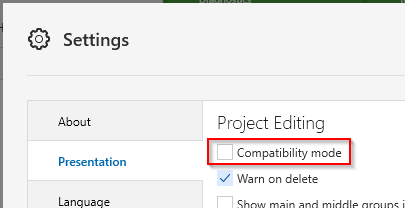
Hi Gabor, the Compatibility Mode is a Setting in ETS, required for working with Device Plugins.
When activated, ETS is restarting in 32bit mode. While you can now work with these older Device Plugins, your ETS is limited to in theory 4GB RAM, but practically (.NET, Small Object Heap) only 1.5GB.
Therefor, it is advisable, to deactivate the Compatibility Mode in ETS, when it is not really required.
Because only then (ONLY THEN), is ETS really running as 64bit Application and can you really benefit from your 16GB RAM.
 0
0
Commenti
82 commenti
Accedi per aggiungere un commento.